
Across India’s interior regions, acute poverty, fragile infrastructure, and the growing impact of climate change are steadily eroding rural livelihoods, forcing large-scale migration.
At the same time, India’s rich heritage of handicrafts is under threat. Mass manufacturing has pushed traditional skills, stripping crafts of their cultural value and artisans of dignified livelihoods.


EkiBeki works at the intersection of these two challenges -
preventing rural migration by creating sustainable livelihoods, while reviving traditional crafts endangered by mechanisation.

How We Select Our Projects
EkiBeki collaborates with grassroots organisations, local institutions, and government bodies to identify regions where craft revival can meaningfully address livelihood insecurity.
Each project is evaluated on:

Potential for livelihood generation, especially for rural women

Status of the craft (endangered, declining, or underutilised)

Local ecosystem including access to materials, community readiness, and market potential

Micro-environment for women artisans, ensuring safety, mobility, and long-term participation
For many projects, our team lives within the village to deeply understand the region
- its people, materials, inspirations, social dynamics, and constraints - before designing interventions.
Community Immersion & Evaluation
Immersive engagement is central to EkiBeki’s approach. Our teams spend extended periods in villages to understand:
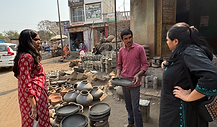
Daily routines and social structures

Existing skill levels and traditional knowledge
Aspirations, challenges, and confidence levels particularly among women
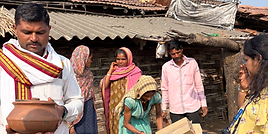
This approach builds trust, dignity, and participation, allowing skill development to emerge organically rather than being imposed.
Our Approach & Results
EkiBeki’s programs integrate:

Technical skill upgradation

Design intervention and product development

Livelihood creation

Confidence, agency, and community empowerment
The result is a sustainable model where traditional craft knowledge is preserved, while artisans gain economic independence and social confidence.
Current Projects
Vikramgad Bamboo Upskilling Project, Maharashtra
Duration: January–April 2025 | August 2025 | December 2025

A year-long, four-phase bamboo upskilling program conducted by Keshav Shristhi and EkiBeki Association, primarily for women artisans in Vikramgad.
The workshop followed a deeply immersive, community-based model, with two female designers from EkiBeki living and working in the village. Before formal training began, time was invested in understanding the artisans’ social ecosystem, daily challenges, and existing bamboo practices, ensuring cultural sensitivity and trust.
Past projects in expanding and developing craft clusters
Nandurbar / Toranmal, Maharashtra
Duration: January-Feb 2026

Nestled in the Satpura Range, Toranmal is known as Maharashtra’s second coolest hill station. But beyond the climate lies something far more powerful - the possibility of a culturally rooted, community-led destination.
A pilot festival (Feb 20-22 2026) marked the inauguration,
it began the positioning of Toranmal not merely as a seasonal attraction, but as a cultural and experiential landmark. Together, with multiple stakeholders, we brought forward:
-
Local SHGs and GI-tagged produce
-
Indigenous foods, spices, and organic vegetables
-
Bamboo crafts, pottery, and traditional dance & music, all leading to some evocative storytelling
Soil to Soul, Kolkata
Duration: Dec 2025

EkiBeki partnered with Soil to Soul in Kolkata to curate a group of artisans for their exhibition, creating a platform for artisans to connect directly with customers and showcase their handcrafted products. The event brought together craft enthusiasts, philanthropists, and conscious consumers, fostering meaningful conversations around craftsmanship and heritage. The artisans were carefully selected for their unique blend of traditional skills and contemporary design sensibilities, helping build deeper appreciation and market access for handcrafted work.
Kalaangan Exhibition, Bhau Daji Lad museum
Duration: May 2024

A celebration exhibition in BDL Museum Plaza, KALAANGAN showcased and supported over 40 traditional and contemporary styles of craftsmanship and design from across the country. This 3-day art and design festival featured a diverse array of handmade products including textiles, accessories, jewellery, and home decor for sale. Visitors also got the chance to engage with the artisans from across India who persist in their craft amidst a changing world dominated by machine-made goods. From exploring the impact of pop culture on Pattachitra art to participating in various craft workshops, there's something for everyone to enjoy!
The festival is presented by Dr Bhau Daji Lad Museum in collaboration with EkiBeki
Kaprada Gujarat – Training Program for Tribal Women

Design development:
-
Tea cosy, Tote bags
Capacity and skill building:
-
Training program for women residing in a hostel run by a philanthropist in Gujarat
-
EA taught the women on how to use sewing machines and how to make sewing patterns
Impact:
-
EA trained about 15 tribal women residing in the hostel
-
However the project was abandoned as there were too many changes in scope
Copper enamel cluster- Alibagh
Duration: 2018 till now
Copper enamelling (Meenakari) flourished under Mughal patronage and was introduced by Raja Man Singh of Amber in the 16th century. While the craft is widely known in Jaipur (where fine jewellery is made using copper enamelling) and Varanasi (notably for the Gulabi Meena style), the copper enamelling practiced in Alibag holds a distinct European influence. Set up by the late Mr. Chandrakant Mhatre, a graduate from J.J. School of Art, at the “Mainuseth Cha Wada” in one of the villages along the Mumbai-Alibag highway, this craft supported a growing community of artisans, with 12-15 workshops mushrooming in the area. But by 2018, with the pressures of earning a livelihood, only two families continued the practice.

Orissa Golden Grass project - Skill and Entrepreneurship Development of Women

The Orissa Golden Grass Project worked with women artisans across 35 villages in Kendrapara district, Odisha, to strengthen livelihoods through traditional Golden Grass craftsmanship. Golden Grass, locally known as Kaincha, is a wild grass found in the riverside villages of Jagatsinghpur and Kendrapara districts and is valued for its natural golden sheen and versatility. As part of the Skill and Entrepreneurship Development of Women in Golden Grass Craft Project, artisans received training to enhance their craft skills, develop market-ready products, and create sustainable income opportunities while preserving this unique craft tradition.
Other projects
Moderation of papers at the NIFT International Conference 2026


Moderation of papers at the NIFT International Conference 2026, with the theme. ‘Equity with the theme Inclusive and Creative Communities’ at the NIFT International Conference 2026,
National Institute of Fashion Technology,with the Ministry of Textiles, Govt. of India
https://www.nift.ac.in/conference. This track focused onbuilding includ=sive ecosystems through creativity, collaboration and community led design practices


